What it takes to actually reach Latino voters — and how we proved it moved them.
Client Make the Road Action New Jersey · 2025
Partners Way to Win · INTRVL · creative by Moira Studio
The problem
Between 2020 and 2024, New Jersey’s presidential margin moved about ten points toward Republicans — from a 15.9-point Democratic win to a 5.9-point one. Democrats outspent Republicans two to one across that period. Whatever that money was buying, it was not reaching the people who moved.
For Latino-focused media the problem is sharper and more specific. As much as 70 percent of online ethnicity targeting misses. Surname targeting stopped working decades ago. Browser language settings are a crude proxy that misses most of the people they are meant to find. So campaigns spend real money on audiences that are substantially not who they think they are, and then draw conclusions from the results.
The approach
Two problems had to be solved at once: find the voters who could actually be moved, and reach them in the language they prefer.
This was a 501(c)(4) issue advocacy program. The advertising made a case about the economy and immigration — who holds responsibility for the cost of living, and who can be trusted on the issues these communities care about. It did not ask anyone to vote for or against a candidate.
Working with INTRVL, we built the audience from survey data rather than demographic assumption — scoring voters on INTRVL’s Mobisuasion model, which ranks people by whether they are both persuadable and mobilizable, then buying against that ranking rather than against a broad Latino segment. Roughly 85 percent of the audience sat in the top two Mobisuasion quintiles. Language preference was modeled the same way, from thousands of digital surveys, and matched at the individual level across connected TV, online video, and social.
Language preference is not a demographic checkbox. It is a behavior, tied to how people engage with culture, entertainment, and community — and voters who prefer Spanish-language content behave very differently from broad Hispanic segments assembled out of third-party data.
The model goes a level deeper than language, into dialect. The word for straw, the thing you drink through, varies across the Spanish-speaking world: popote in Mexico, from the Aztec; pajita across much of Latin America, from Spain; and sorbeto in Puerto Rico. Ask which word someone would use and you learn which community they belong to — which tells you which messenger to put in front of them, and in whose accent.
The buy
6.3 million impressions: 4.2 million on connected TV, 1.3 million on online video, 689,000 on social. Roughly a fifth of delivery ran in Spanish, with the English-Spanish split determined by the model and by what people were actually watching rather than fixed in advance. Seven creative variants. Average frequency of 31.4 across the flight — the audience was drawn small enough to saturate.
How we know it worked
This is the part most campaigns skip. Before the program launched, about 200,000 targeted voters were matched against an equivalent control group of 200,000 who were deliberately withheld from the buy, balanced on partisanship, turnout propensity, and movability. After the election, 5,571 survey responses were collected across two separate methods over 35 days.
That design is the difference between believing a program worked and being able to show it.
The results
The argument landed where it was aimed. Among targeted voters, agreement that the richest one percent bear more responsibility for the country’s problems rose 1.7 points. Trust on immigration rose 8.1 points, trust on personal finances 8.9, and Democratic Party favorability 5.5.
Those attitude shifts are the program’s own result — they measure whether the case being made was persuasive.
The survey also measured vote choice, which is the harder thing to move and was not what the advertising asked for. Within the targeted universe, support for the Democratic candidate rose 4.0 points and support for the Republican fell 3.1. Those move the margin in the same direction, so the gap between the two candidates widened by 7.1 points — from 22.5 points to 29.6. Across roughly 200,000 voters, that is a shift of about 14,000 votes. There is a 90 percent chance the true effect falls between 5.6 and 8.4 points, and better than 95 percent confidence the lift was positive.
Reported turnout rose a point overall and nearly two points among voters under 35.
The finding we did not expect: in-field results came in two to three times larger than the pre-campaign testing predicted — those ratios are for Like Us, the strongest performer in testing: 1.95x on personal finances, 1.98x on immigration trust, 2.75x on party favorability. The most likely reason is the targeting itself. Pretests measure a general population; this program only ever spoke to the half of the universe most capable of moving. Finding the movable voters before you spend the money changes what the money does.
The creative
Seven spots ran. Where a message worked in both languages it was made in both — not translated, but built twice, with the messenger and the accent chosen for the community the model had identified.
Soaring · English
Passaic · Spanish
Side · English
Lado · Spanish
Like Us · English
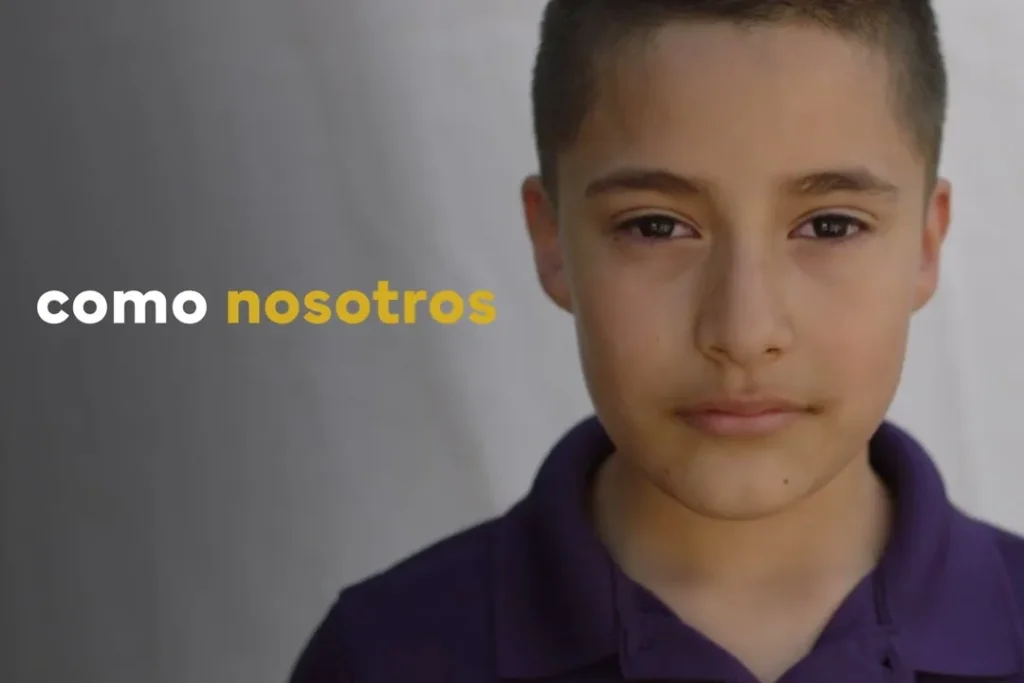
Como Nosotros · Spanish
One spot ran in English only. Break made an argument about what a federal budget bill costs a household, and the model put it where it landed hardest rather than translating it by default.
Break · English only
Awards
- Reed Award, 2026 — Best Use of CTV Targeting (Democratic), with INTRVL and Make the Road Action · 2026 winners list, Campaigns & Elections
- CampaignTech Gold, 2025 — Innovation in Digital Advertising, credited to INTRVL and WKQ Media · 2025 winners list, Campaigns & Elections
- Reed Award finalist, Best Use of Online Targeting
Campaigns & Elections publishes winners only, so the finalist selection above has no public list to point at. Our full record, with every citation linked to the awarding body, is on the awards page.